All Categories
Featured

The Outlook for Profitable Franchise Investments in 2026
Table of Contents
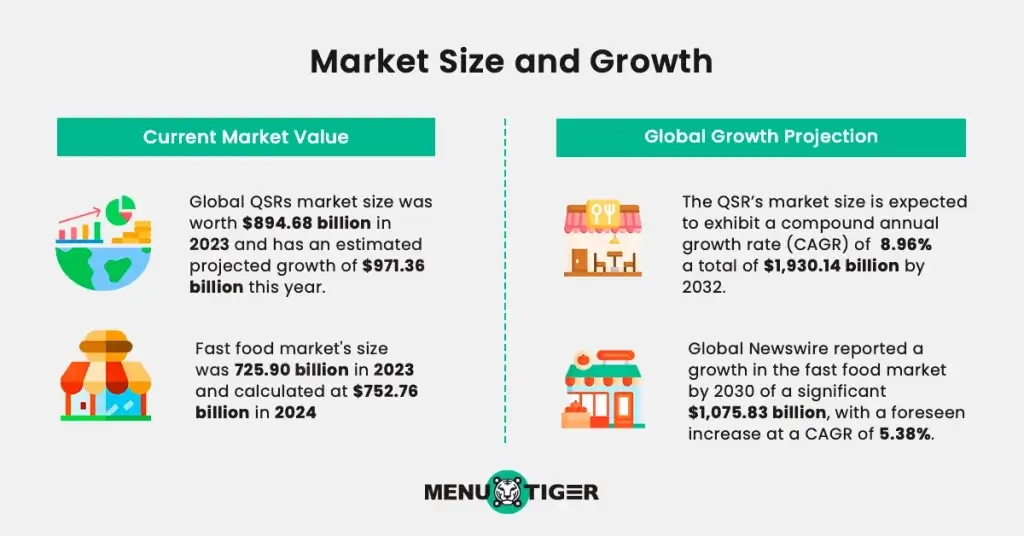
Healthier junk food offerings to align with wellness-driven consumer preferences. Development of digital purchasing, AI-powered drive-thrus, and automation in QSRs. Increasing adoption of plant-based and sustainable menu options., the burgers and sandwiches section led the marketplace with, showing their supremacy as an international quick food market., the Quick Service Restaurants (QSRs) section dominated with a, supported by efficiency, affordability, and international accessibility.
: Held a substantial share alongside The United States and Canada, with a high penetration of international brands.: Poised for promising growth due to quick urbanization, young demographics, and increasing middle-class demand.: Expected to witness steady growth with the increasing entry of global QSR chains and broadening delivery platforms. The global junk food market is extremely competitive, with significant players including These companies are leveraging digital purchasing, menu diversification, and global expansion strategies to sustain development in a competitive environment.
Identified by high turnover, limited table service, and emphasis on benefit, this sector has actually evolved beyond conventional burgers and fries to include worldwide motivated foods, plant-based options, and digitally incorporated buying systems. As per the U.S. Bureau of Labor Statistics, the typical American invests 37 minutes per day on meal preparation in the house, a decrease of nearly 25% because 2000, showing a structural shift towards outsourced eating.
The accelerating pace of metropolitan life with dietary behaviors is driving the development of the junk food market. As per the United Nations Department of Economic and Social Affairs, over 2.5 billion people are forecasted to be contributed to city populations by 2050, mainly in Asia and Africa, where infrastructure and long commutes enhance time hardship.

Why Invest in the Fast Casual Sector in 2026?
This temporal pressure drives dependence on quick dining solutions, with quick food outlets strategically located near transit hubs and downtown. The proliferation of digital platforms has redefined junk food ease of access, changing it from a location-bound service to an on-demand utility is additionally improving the development of junk food market.
In Dubai, the government's Smart City effort has actually facilitated drone-based food delivery trials, even more speeding up service efficiency. These technological developments have broadened the consumer base to include senior populations and stay-at-home people who previously counted on home-cooked meals. The rising public health crises, particularly weight problems and type 2 diabetes and growing awareness over the nutritional health is credited limit the development of quick food market.
Likewise, the UK's sugar levy led to a 22% decrease in sugar content across sodas served in quick food outlets in between 2018 and 2022, according to Public Health England. These regulations increase functional complexity and constrain menu development, engaging chains to reformulate dishes a process that risks altering taste profiles and alienating core consumer sections.
As per the Food and Farming Organization of the United Nations, extreme weather condition events connected to climate modification lowered global wheat yields by 5.7% in 2022, straight impacting bun and pastry expenses for significant chains. McDonald's disclosed in its 2023 sustainability report that active ingredient price volatility contributed to a 12% boost in food procurement expenditures year-on-year.
The launch of plant-based and lab-grown alternatives is acquiring traction among environmentally and health-conscious customers, which is enhancing the development of fast food market. According to the Good Food Institute, worldwide sales of plant-based meat reached $9.7 billion in 2023, with junk food chains acting as primary circulation channels. The ecological necessary is also driving adoption: a University of Oxford research study discovered that producing a plant-based hamburger generates 90% less greenhouse gas than its beef counterpart.
The Future of 2026 Brand Growth MilestonesKey Steps for Hitting Major Milestones
According to the World Bank, the global middle class is forecasted to reach 3.2 billion by 2030, with 88% of growth coming from in Asia, Africa, and Latin America. Indonesia's junk food market grew by 11% annually between 2020 and 2023, driven by increasing non reusable incomes and the expansion of food courts in mall, according to the Central Bureau of Data of Indonesia.
The rising labor restrictions in developed economies where labor force participation stays listed below pre-pandemic levels is affecting adversely on the development of fast food market. According to the U.S. Bureau of Labor Stats, the leisure and hospitality sector, which includes junk food, had 780,000 unfilled positions in 2023, regardless of providing average hourly incomes of $15.80 a 23% increase considering that 2019.
The trend towards environmentally friendly efforts, where there are absence of greenwashing systems and other sustainability claims are likely to deteriorate the development of the junk food market. McDonald's dealt with regulative examination in France for identifying product packaging as "eco-designed" without validating lifecycle reductions, as reported by the Directorate General for Competition, Customer Affairs, and Fraud Control.

Latest Posts
Is Scaling a Wise Move?
Major Regional Expansion Milestones for 2026 Brands

Why Fast Casual Market Value Is Surging